

Planning a Sensory-Friendly Vacation
Why Sensory-Friendly Travel Planning Matters
Travel can be one of the most rewarding experiences for families, but for travelers with sensory sensitivities, unfamiliar environments can sometimes feel overwhelming. Thoughtful planning can make a significant difference, helping create trips that feel calm, flexible, and enjoyable for everyone involved.
Smart Planning Strategies for Sensory-Friendly Travel
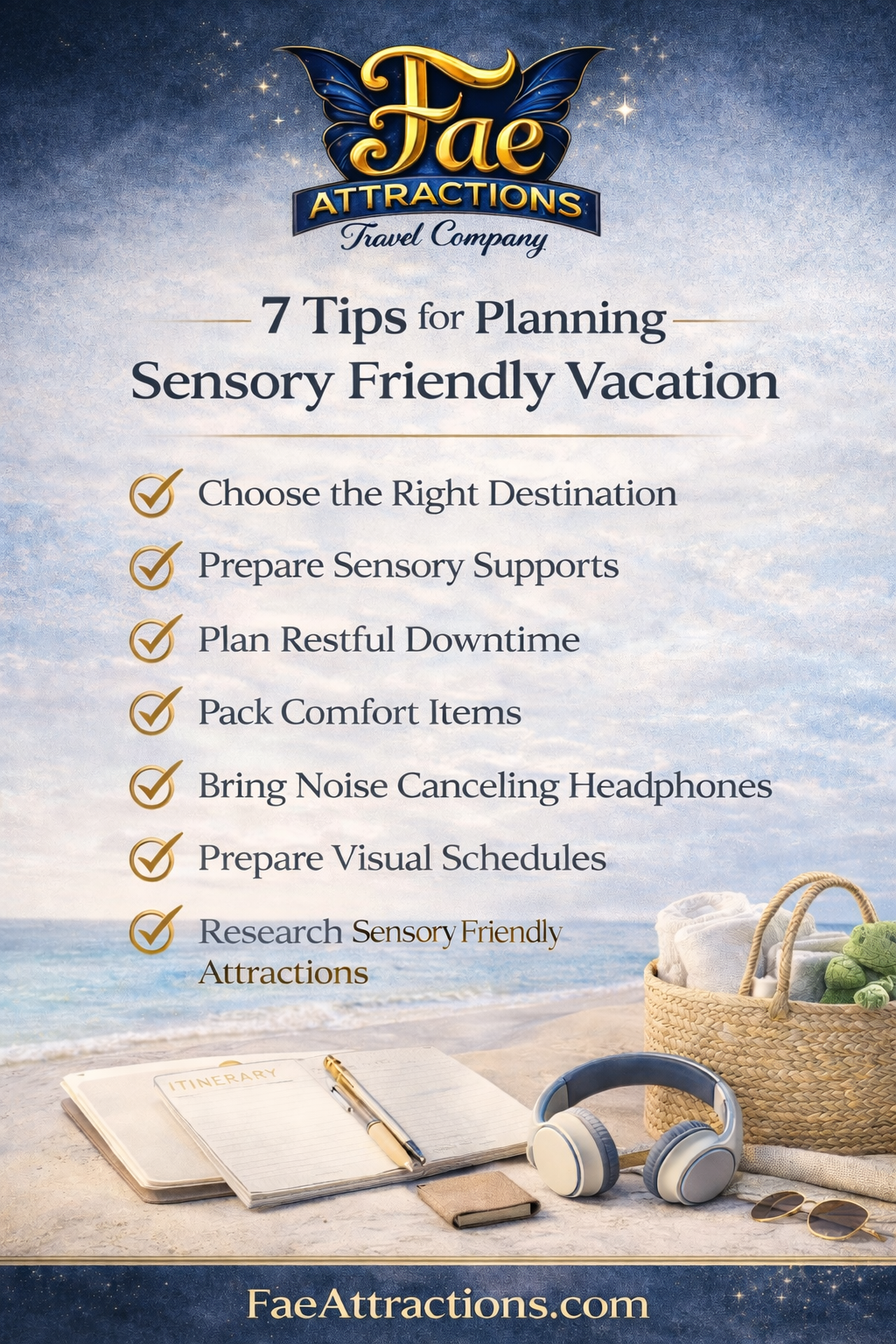
Choose the Right Destination
Some destinations naturally provide calmer environments than others. Quiet beaches, scenic nature destinations, and smaller towns often offer more relaxed surroundings that allow travelers to move at their own pace.
That does not mean larger destinations such as theme parks or cruise vacations are off the table. These experiences can still be wonderful when trips are planned with pacing and sensory needs in mind.
Selecting accommodations that provide quiet spaces, easy access to rest areas, and flexible schedules can make a meaningful difference in the overall experience.
Plan Flexible Schedules
One of the most helpful strategies for sensory-friendly travel is building flexibility into the itinerary.
Instead of planning long, nonstop days, consider alternating between active experiences and slower activities. Rest days, pool time, or relaxing scenic outings can help prevent overstimulation.
Shorter activity blocks and the ability to take breaks throughout the day allow everyone to recharge and enjoy the trip more comfortably.
Prepare for Travel Days
Airports and travel days can often be the most challenging parts of a trip. Preparation can help reduce uncertainty and make the experience smoother.
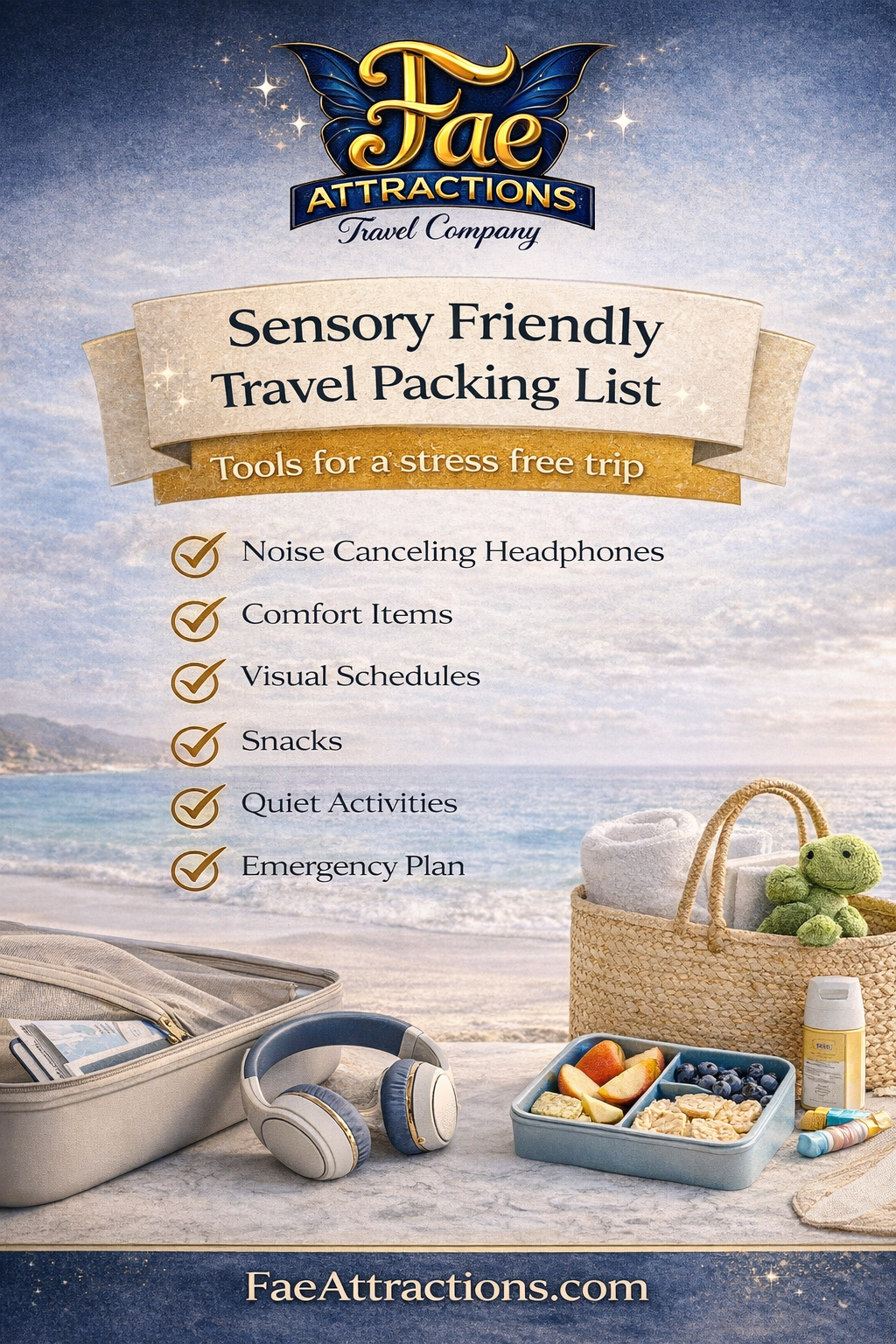
Helpful items may include:
• Noise reducing headphones
• Familiar comfort items
• Favorite snacks
• Visual schedules or travel plans
• Sensory tools or fidget items
Arriving early and allowing extra time for transitions can also reduce stress and make the travel day feel less rushed.
Work With Travel Professionals Who Understand Sensory Needs
Planning a trip that accounts for sensory needs can feel overwhelming when trying to coordinate transportation, accommodations, and activities.
Working with a travel advisor who understands sensory-friendly travel can help families identify destinations, accommodations, and experiences that are more comfortable for their specific needs.
Thoughtful planning can transform a trip from stressful to empowering.

Research Accessibility Resources Before You Go
Many attractions now publish accessibility guides that describe sensory factors such as noise levels, lighting effects, and ride intensity. Reviewing these resources before a trip can help travelers decide which experiences feel comfortable and which may be better to skip.
Some theme parks also provide quiet areas or alternate attraction waiting options designed to reduce sensory overload.
Travel Should Be Accessible to Everyone
Sensory-friendly travel is not about limiting experiences. It is about creating an environment where travelers can explore the world in a way that feels safe, comfortable, and enjoyable.
As awareness grows and more destinations adopt inclusive programs, travel is becoming more accessible than ever before.
With the right preparation and support, all families can experience the joy of discovering new places together.
To make planning even easier, several organizations now offer programs and tools designed to support sensory-friendly travel.
Programs That Support Sensory-Friendly Travel
Many organizations now offer programs designed to help travelers with sensory sensitivities navigate airports, attractions, and destinations more comfortably.
IBCCES Accessibility Card
What it does:
Allows travelers to document accessibility needs ahead of time so participating attractions can review them before arrival.
Why it helps:
Reduces the need to repeatedly explain accessibility needs at multiple locations.
Website:
https://www.accessibilitycard.org
Hidden Disabilities Sunflower Program
What it does:
Provides a sunflower lanyard or badge that discreetly signals a hidden disability.
Where it's recognized:
Airports, transportation hubs, hotels, and attractions around the world.
Website:
https://hiddendisabilitiesstore.com
Wings for Autism and Wings for All
What it does:
Allows families to practice the airport travel process before a real trip.
Why it helps:
Simulated travel experiences help reduce anxiety and make airport procedures more predictable.
Information:
https://thearc.org/our-initiatives/travel
TSA Cares
What it does:
Provides assistance through airport security for travelers with disabilities or medical conditions.
Contact before travel:
At least 72 hours before departure.
Website:
https://www.tsa.gov/travel/tsa-cares
Phone:
855-787-2227
KultureCity Sensory Inclusive Locations
What it does:
Certifies venues as sensory inclusive and trains staff to support guests with sensory sensitivities.
What venues may provide:
Sensory bags, headphones, and quiet spaces.
Website:
https://www.kulturecity.org
Autism on the Seas
What it does:
Offers supported cruise sailings designed for families traveling with autistic or neurodivergent guests.
Why it helps:
Staff are trained specifically to support sensory and behavioral needs throughout the cruise.
Website:
https://autismontheseas.com
Final Thoughts
Planning a sensory-friendly vacation may require a little extra preparation, but the reward is a journey that feels comfortable, enjoyable, and meaningful for everyone involved. With growing awareness and more accessibility programs available than ever before, families have more tools than ever to help make travel smoother and more inclusive.
If you would like support planning a sensory-friendly trip, Fae Attractions specializes in helping travelers design vacations that match their comfort level, accessibility needs, and travel goals.
Please feel free to reach out if you have any questions or need any assistance in planning your next travel adventure.
Related Reading
For readers who would like to explore additional guidance on accessible and sensory-friendly travel, the following articles offer helpful insights and practical planning advice.
• The Complete Autistic Travel Guide
https://autismspectrumnews.org/the-complete-autistic-travel-guide/
A comprehensive overview of planning travel experiences that account for sensory sensitivities and unfamiliar environments.
• Autism-Friendly Holiday and Travel Tips – Autism Speaks
https://www.autismspeaks.org/blog/autism-friendly-holidays-tips-make-sure-all-calm-when-all-bright
Provides practical advice for preparing sensory supports, comfort items, and routines during travel.
• Traveling With Autism: A Parent’s Guide
https://leafwingcenter.org/traveling-with-your-child-with-autism/
Offers planning strategies that help families reduce stress and create positive travel experiences.
• Sensory-Friendly Places to Visit Guide
https://www.sensoryfriendly.net/sensory-activities-for-autism/
Explains how sensory-inclusive attractions and environments help make travel accessible to more people.
• Tips for Visiting Theme Parks With Autism
https://www.undercovertourist.com/blog/theme-parks-adult-with-autism/
A practical look at preparing for theme park environments, including pacing strategies and using disability access programs.

About the Author
Nadia Justice is an accessible travel advocate and certified autism travel professional who helps families plan vacations designed to support sensory-friendly experiences.